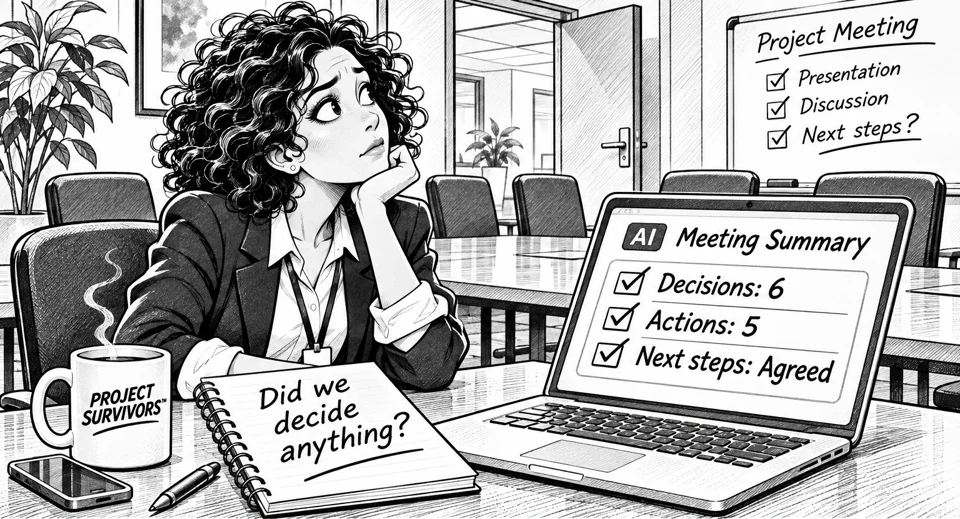
The meeting lasted an hour.
There was a presentation, several questions, a discussion about something that wasn't on the agenda, and a general sense that progress had been made.
Everyone thanked everyone else.
The meeting ended.
A little later, a beautifully formatted summary appeared.
Apparently, three decisions had been made, five actions agreed and everyone was clear about what happened next.
This was encouraging news.
Particularly to the people who couldn't remember agreeing to any of it.
A summary isn't necessarily a conclusion
Meetings can produce a surprising amount of conversation without producing much clarity.
People discuss possibilities. They express preferences. They agree that something is worth investigating. Sometimes they make decisions.
Those aren't all the same thing.
Yet once the meeting ends, the distinctions can become blurred. A suggestion becomes an action. An expression of support becomes approval. Something that was still being discussed appears in the record as a settled decision.
The problem isn't necessarily that anyone has deliberately misrepresented what happened.
It's that the meeting may have ended before everyone confirmed what actually happened.
And now we have AI
AI-assisted meeting tools can help capture and summarise discussions.
That's potentially useful, particularly when nobody has been assigned to take notes.
But a convincing summary isn't the same as a confirmed record.
A tool may describe the discussion clearly without establishing whether a decision was authorised, whether an action was accepted by its proposed owner or whether an unresolved question has actually been resolved.
Those are matters for the people involved.
And if the summary arrives after everyone has left, the opportunity to confirm those points together during the meeting has already passed.
The record can still be reviewed and corrected afterwards, of course. But that requires someone to do it.
The two minutes that might matter most
Before an important meeting finishes, five questions are worth asking:
- What have we actually decided?
- Who had the authority to agree to those decisions?
- What needs to happen next, who is responsible and by when?
- What remains unresolved?
- Who will record, circulate and follow up the outcomes?
Not every meeting needs formal minutes. Not every conversation needs an action log.
But when decisions and commitments matter, someone needs to make sure they're understood and recorded accurately.
Otherwise, the organisation may have an excellent account of the conversation and a rather less reliable understanding of what it means.
The Project Survivors observation
A meeting summary tells you what was discussed. A confirmed meeting record should make clear what was decided, what remains open and what happens next.
And sometimes the most valuable contribution comes from the person who asks, just as everyone is preparing to leave:
“Before we finish, can we just confirm what we've agreed and who's doing what?”
It isn't a particularly glamorous question.
But neither is attending the same meeting again next Tuesday.
Explore further
Understand: The Dangerous Little Word “Agreed” — when apparently harmless agreement becomes commitment.
Act: Before Everyone Leaves the Meeting — five questions worth asking.
New to Projects? Your First Project Meeting.